
Friday, February 06, 2026

News Destination For The Global Indian Community

News Destination For The Global Indian Community

TOP STORY
LifeMag
The Arithmetic of the India–US Deal

The Arithmetic of the India–US Deal

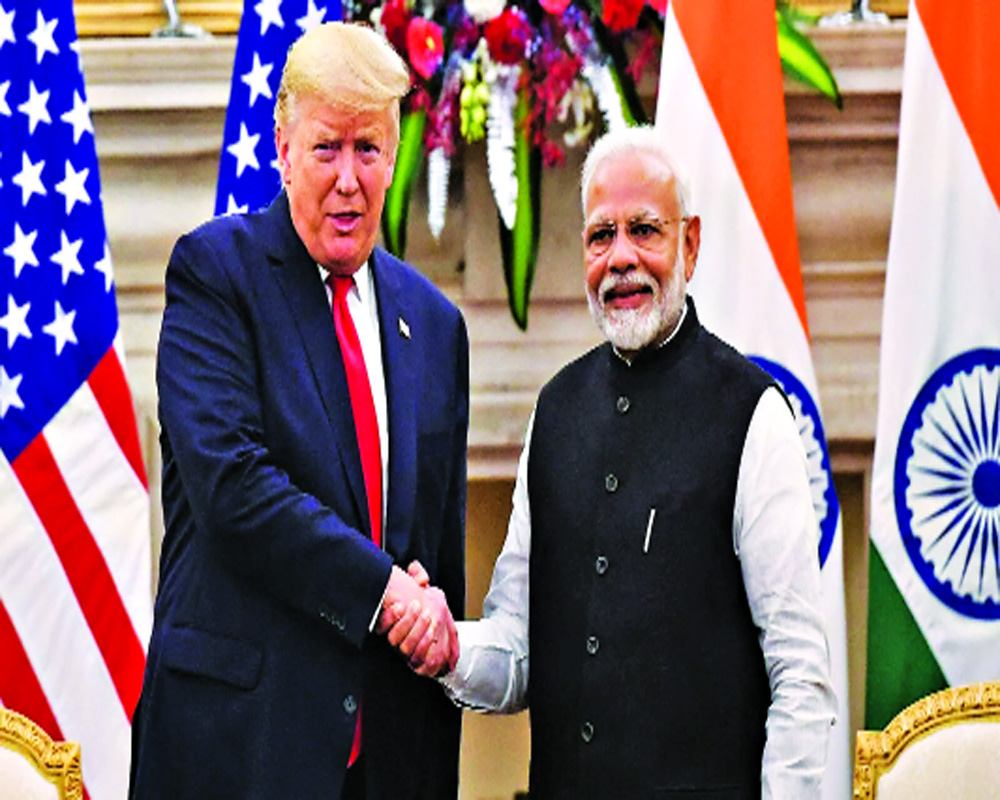
In trade diplomacy, language is never ornamental. It frames intent, signals leverage, and moves markets long before lawyers move clauses. When President Donald Trump announces an India–US “trade deal” via social media, investors hear closure, even if diplomats know it is only a pause. That is the grammar of Trump-era economics: tariffs are declared publicly to shape sentiment; the paperwork trails behind, negotiated quietly. The February 2 India–US announcement fits that script.

On the surface, the message is simple. US tariffs on Indian goods drop to 18%, and the additional 25% penalty tied to India’s Russian oil purchases is withdrawn. India has welcomed the relief. The harder questions lie beneath—what is binding, what is conditional, and what remains intentionally ambiguous.

What matters first is what India sidestepped. The earlier tariff stack had reached levels that threatened labour-intensive exporters in textiles, leather, gems and jewellery. For clusters in Tiruppur, Jalandhar and Surat, this was not theory but survival. Tariff shocks do more than raise prices; they reshuffle global supply chains. Lowering them restores competitiveness at the margin and keeps India inside buyer networks.

Judging 18% against a vanished low-tariff world misses the point. The baseline has shifted for everyone. The relevant comparison is relative positioning. On that scale, India moves back into contention. Markets understood this immediately, responding not to a finished agreement but to the removal of a worst-case trajectory.

Why now? Partly competitive diplomacy. The India-EU agreement changed incentives, nudging Washington to re-engage. Partly legal timing, as executive tariff powers face scrutiny at home. De-escalation, in this sense, is strategic housekeeping.

India’s restraint mattered. New Delhi avoided theatrics, treating patience as leverage. That calm has bought strategic space—space to pursue technology access, investment flows, and supply-chain partnerships in semiconductors, clean energy and advanced manufacturing.

Yet caution is essential. Proclamations can snap back as quickly as they appear. Without clear, publishable understandings, volatility will persist. This window must be used to lock in rules, deepen investments, and convert a tactical truce into a durable economic partnership—before uncertainty returns faster than explanations.

The Arithmetic of the India–US Deal

The Arithmetic of the India–US Deal

In trade diplomacy, language is never ornamental. It frames intent, signals leverage, and moves markets long before lawyers move clauses. When President Donald Trump announces an India–US “trade deal” via social media, investors hear closure, even if diplomats know it is only a pause. That is the grammar of Trump-era economics: tariffs are declared publicly to shape sentiment; the paperwork trails behind, negotiated quietly. The February 2 India–US announcement fits that script.

On the surface, the message is simple. US tariffs on Indian goods drop to 18%, and the additional 25% penalty tied to India’s Russian oil purchases is withdrawn. India has welcomed the relief. The harder questions lie beneath—what is binding, what is conditional, and what remains intentionally ambiguous.

What matters first is what India sidestepped. The earlier tariff stack had reached levels that threatened labour-intensive exporters in textiles, leather, gems and jewellery. For clusters in Tiruppur, Jalandhar and Surat, this was not theory but survival. Tariff shocks do more than raise prices; they reshuffle global supply chains. Lowering them restores competitiveness at the margin and keeps India inside buyer networks.

Judging 18% against a vanished low-tariff world misses the point. The baseline has shifted for everyone. The relevant comparison is relative positioning. On that scale, India moves back into contention. Markets understood this immediately, responding not to a finished agreement but to the removal of a worst-case trajectory.

Why now? Partly competitive diplomacy. The India-EU agreement changed incentives, nudging Washington to re-engage. Partly legal timing, as executive tariff powers face scrutiny at home. De-escalation, in this sense, is strategic housekeeping.

India’s restraint mattered. New Delhi avoided theatrics, treating patience as leverage. That calm has bought strategic space—space to pursue technology access, investment flows, and supply-chain partnerships in semiconductors, clean energy and advanced manufacturing.

Yet caution is essential. Proclamations can snap back as quickly as they appear. Without clear, publishable understandings, volatility will persist. This window must be used to lock in rules, deepen investments, and convert a tactical truce into a durable economic partnership—before uncertainty returns faster than explanations.

Leave a comment

Comments (0)

Opinion Express TV

Shapoorji Pallonji

SUNGROW

GOVNEXT INDIA FOUNDATION

CAMBIUM NETWORKS TECHNOLOGY

Opinion Express Magazine