



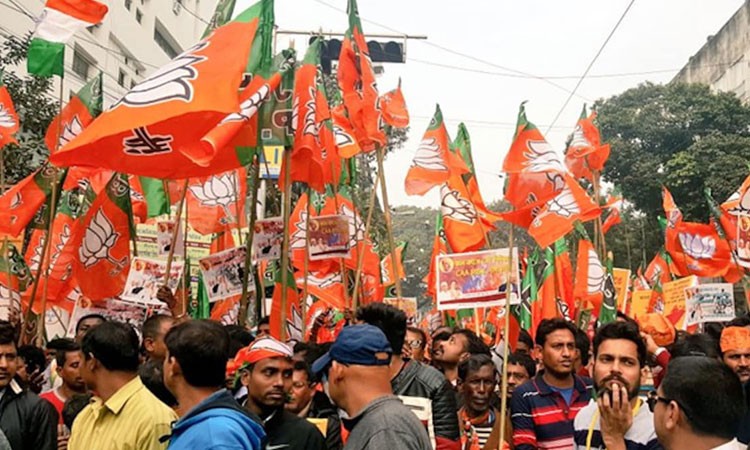
North Bengal and southwest Bengal, but it has also made significant inroads in erstwhile Trinamool bastions of Kolkata and adjoining districts. In several districts of the State, such as Cooch Behar, Alipurduar, Jalpaiguri, Darjeeling, Kalimpong, Purulia, Paschim Bardhaman, Jhargram, Bankura and Purba Medinipur, the trends indicate that the Trinamool is likely to draw a blank. write fresh content in 500 words for west bengal elections 2026
The 2026 West Bengal Assembly elections have emerged as one of the most defining political contests in the State’s recent history. More than a battle for administrative control, the election reflects a larger ideological and social shift that has steadily reshaped Bengal’s political landscape over the last decade. The Bharatiya Janata Party (BJP), once considered a marginal force in the State, has transformed itself into a formidable challenger capable of influencing both urban and rural political narratives.
For the BJP, the gains in Bengal represent more than electoral arithmetic. The State carries deep symbolic significance because of its historical connection with Syama Prasad Mookerjee, founder of the Bharatiya Jana Sangh, the ideological predecessor of the BJP. For decades, Bengal remained politically resistant to the party’s expansion despite its ideological roots being linked to the State. The 2026 election, therefore, is being viewed by party leaders and supporters as a major breakthrough in completing a long-standing political mission.
The BJP’s performance across northern and western districts has once again highlighted the consolidation of its support base. Regions such as Cooch Behar, Alipurduar, Jalpaiguri, Darjeeling, Kalimpong, Purulia, Bankura, Jhargram and Paschim Bardhaman have shown strong momentum in favour of the saffron party. These districts, which had already displayed signs of political realignment in previous elections, appear to have further strengthened the BJP’s position in 2026.
Equally significant has been the party’s growing acceptance in urban centres, particularly Kolkata and its surrounding districts. Traditionally seen as strongholds of the Trinamool Congress (TMC), these areas have witnessed increasing political competition. The BJP’s ability to penetrate urban middle-class voters, sections of youth and first-time voters has added a new dimension to Bengal politics. Campaigns focused on governance, corruption allegations, employment opportunities and national identity appear to have resonated with a section of the electorate seeking political change.
For the Trinamool Congress, the election remains a critical test of resilience. Since coming to power in 2011 under Mamata Banerjee’s leadership, the party has maintained a dominant position in Bengal politics. Welfare schemes, grassroots organisation and strong regional identity politics helped the TMC build a loyal support base across the State. However, anti-incumbency sentiments, organisational challenges and the BJP’s aggressive grassroots expansion have created a more competitive political environment than ever before.
The Left Front and the Congress, once central pillars of Bengal politics, continue to struggle for relevance in a rapidly polarised contest. While both parties attempted to regain lost ground through issue-based campaigns and alliance-building efforts, the political narrative remained largely centred around the BJP-TMC rivalry. This bipolar contest has significantly altered the State’s traditional electoral dynamics.
The 2026 elections also underline the changing aspirations of Bengal’s voters. Economic concerns, unemployment, industrial development, border security and welfare delivery emerged as key campaign themes. At the same time, identity politics and ideological mobilisation continued to play a powerful role in shaping voter behaviour.
As the results unfold, one thing is clear: West Bengal politics is no longer defined by old certainties. The State has entered a new era of intense political competition where ideology, governance and grassroots mobilisation are colliding to shape its future
 OpinionExpress.In






Comments (0)